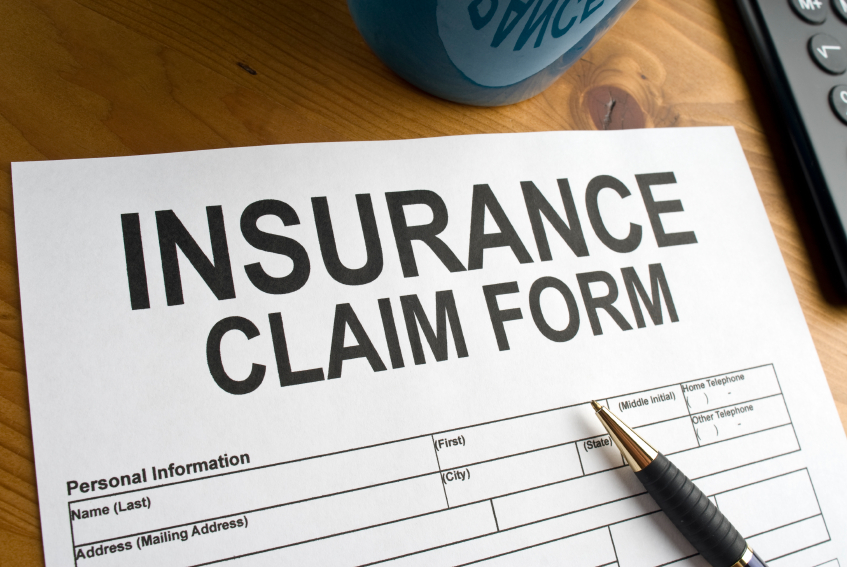
Archive for General Insurance
Should I File A Claim or Not?
Posted by: | Comments“
What should I think about when considering whether to file a claim on my insurance?”
People buy insurance so that when they have a covered claim they can get paid for their loss. However, as surprising as it may seem many people give up their rights under their insurance policy because they don’t want to file a claim. Read More→
What Is A Surplus Lines Insurer and Why Does It Matter?
Posted by: | Comments
“The quote I got from my broker indicates that the insurer is a ‘Surplus Lines Insurer’. What is a Surplus Lines Insurer and why does it matter?”
Surplus Lines Insurers, also known as ‘Non-admitted Insurers’ are insurers that specialize in providing insurance for exposures that most regular insurers do not want to provide. Regular insurers, which are also known as ‘Admitted Insurers’, are insurers that have filed as such with the State Department of Insurance in your state and have had their rates and policy language approved by the Department of Insurance. Admitted Insurers policies are also subject to your state’s ‘Guarantee Fund’ which bails out bankrupt insurance companies. Surplus Lines Insurers’ policies are not subject to Guarantee Funds so that if the insurer is not financial able to pay claims, the claims will go unpaid.
Surplus Lines Insurers often will write types of policies that admitted insurers won’t, or cover people that have significant previous claims, or provide insurance for classes of business that admitted insurers won’t. However, Surplus Lines policies are often subject to MANY more exclusions and SERIOUS limitations than standard policies are. Likewise, premiums are likely to be higher. Surplus lines policies are also subject to policy fees and taxes that admitted policies are not. While most Admitted Insurers will allow directly billed installment payment plans, Surplus Lines insurers want to have the entire estimated premium paid in advance. If a policyholder needs to make payments in installments, premium financing is usually the only option.
In some states, it is illegal to offer a Surplus Lines policy that is lower in price than an Admitted policy providing similar coverage. Likewise some states make it illegal to offer a Surplus Lines policy if there are Admitted Insurers willing to offer coverage. These administrative rules have been put in place because where an admitted insurer is willing to offer the coverage the insurance consumer is nearly always better off buying the coverage from an admitted insurer.
Because state guarantee funds don’t apply to Surplus Lines policies, it is critical to make sure that any Surplus Lines insurer quoting is stable financially, otherwise you may find that in the event of a claim there is no money to pay the claim or even if there isn’t a claim your customers may be unwilling to accept a certificate of insurance issued by a financial weak insurer.
There are some Surplus Lines Insurers that quote low premiums while adding some oddball extra coverage, that few people if anyone at all would buy, to get around the rules that prohibit offering such policies at lower than Admitted insurers. Don’t be fooled by that approach. Even if technically not a violation of the law, you’ll still be subject to all the downsides of a Surplus Lines policy.
If you’re in the cleaning business and you do exterior windows above 3 stories or you do floor waxing at grocery, drug or other locations with large tile or linoleum floors you probably should be insured with a Surplus Lines insurer. Likewise if you had several losses or if you use a lot of subcontractors you may find that Surplus Lines insurer are willing to provide coverage for you even if Admitted insurers will not.
Why Should I Carry Commercial Auto Insurance, not Personal?
Posted by: | Comments
“My customer says that I have to supply them with a certificate of commercial auto insurance. I carry personal auto insurance on all my vehicles. Why isn’t that sufficient?”
Simply put, a personal auto policy doesn’t provide the same type of coverage or cover all the same types of vehicles that a commercial auto policy does. When you are working for a customer and driving onto the property they own or lease or may interact with their employees or customers in the parking lot of the building where you are to work, they want to be sure that if one of these people are injured or property is damage as the result of your being at the site with your vehicle to work for them that your policy will pay any resultant claims.
“But won’t my personal auto policy cover such claims?”
It might, depending on the situation, but it might not to. And that is why the customer wants a certificate of commercial auto insurance. Here are some examples where many or most personal auto policies will not cover. Read More→
Won’t My Homeowners Policy Cover My Business Operations?
Posted by: | Comments
“I work out of my home and have a homeowners’ policy. Won’t my homeowners’ policy cover my home based business exposures?”
What we can say with certainty is that homeowners’ policies are not designed to cover business exposures. While often they provide some minimal coverage, it is totally inadequate for most home based businesses. Read More→
How Can I Avoid Having to Pay Workers Comp Premiums on My Subs?
Posted by: | Comments
“All my workers are subcontractors. How can I avoid having to pay premium at audit time on my Workers Compensation policy?”
The simplest and most fool proof way to avoid owing Workers Compensation premium at audit on the work of subcontractors is to always obtain a certificate of Workers Compensation insurance from your subcontractor. A Workers Compensation certificate will be regarded as proof by the auditor that the worker was an independent contractor and not an employee unless other evidence demonstrates it to the contrary. Read More→
Beware of certain exclusions
Posted by: | Comments
Last week, I explained that insurance policies have exclusions to eliminate coverage for those things covered by other policies, for things that can’t or shouldn’t be insured and for things that are too costly to insure. Examples of typical exclusions include war, wear and tear, pollution. Commercial General Liability (CGL) policies have exclusions for liability arising from autos, watercraft, aircraft and injuries to employees because their are policies that are designed to cover those exposures. Where more attention needs to be paid to exclusions is where the exclusions are specific to the nature of a business’ operations. Read More→
How Can I Make My Insurance Work For Me?

Posted by: | Comments
“I’ve been in the cleaning business for years and have never carried liability insurance. Why should I spend the money to buy coverage when I’ve never had claim problems?”
Many cleaning services express similar sentiments, especially in these hard economic times. However, taking that viewpoint may prove to be more costly than the premium to buy liability insurance. There are two major reasons it may prove more cost not to carry liability insurance than to carry it. Read More→
Hello World…
Posted by: | CommentsWe would like to welcome you to our new website. We hope you’ll stick around for a while and explore some the valuable insurance information we have developed for your small business. Many of the articles are focused towards the cleaning industry since that is our core business, but you will also find many articles are suited well to most small businesses
Some of the topics that will be covered include:
- Tips related to hiring employees
- Reducing your business insurance costs
- Structuring your business for success
- Using your business insurance as a marketing tool
We’ve setup a live chat service on the website (look to the right) so you can talk to a licensed insurance agent and get your questions answered right away. Someone should be online to answer your questions between 8am to 5pm Pacific time. If it shows that no one is online, you are welcome to leave a note (make sure you leave a phone number or email address so we know how to contact you) and an agent will get in touch with you ASAP.
We’ve also setup a Twitter feed for the site. If you follow us on Twitter, we’ll notify you whenever we post something. There’s also an RSS feed of the site so you can subscribe that way if you like too.
So look around the site. We’ll keep working on it to make it as effective for you as possible.